Conscience
In Oscar Wilde's The Picture of Dorian Gray, conscience is not a stable inner voice but a concept that is dramatically redefined through the novel's central magical mechanism. Initially presented as a traditional moral guide, conscience is soon externalized, materialized in the portrait that bears the marks of Dorian Gray's sins, and ultimately becomes an object of hatred that he seeks to destroy. The novel traces a trajectory from conscience as a hoped-for redeemer to conscience as a hated tyrant, ending with a violent attempt to annihilate it that paradoxically destroys the man himself.
Conscience as a Divine Guide and a Visible Symbol
In the immediate aftermath of his cruel rejection of Sibyl Vane and her subsequent suicide, Dorian Gray experiences a conventional moral awakening. He resolves to resist temptation, to break with Lord Henry Wotton, and to return to Sibyl, believing that "the picture, changed or unchanged, would be to him the visible emblem of conscience." He imagines that the portrait will serve as a guide through life, "what holiness was to some, and conscience to others, and the fear of God to us all." At this point, Dorian still conceives of conscience as a positive, even divine force, one that can lead him toward reparation and a pure life. He tells Lord Henry, "I know what conscience is, to begin with. It is not what you told me it was. It is the divinest thing in us." This early conception is traditional: conscience is an internal moral compass, and Dorian believes he can follow it back to goodness.
The Portrait as Externalized Conscience
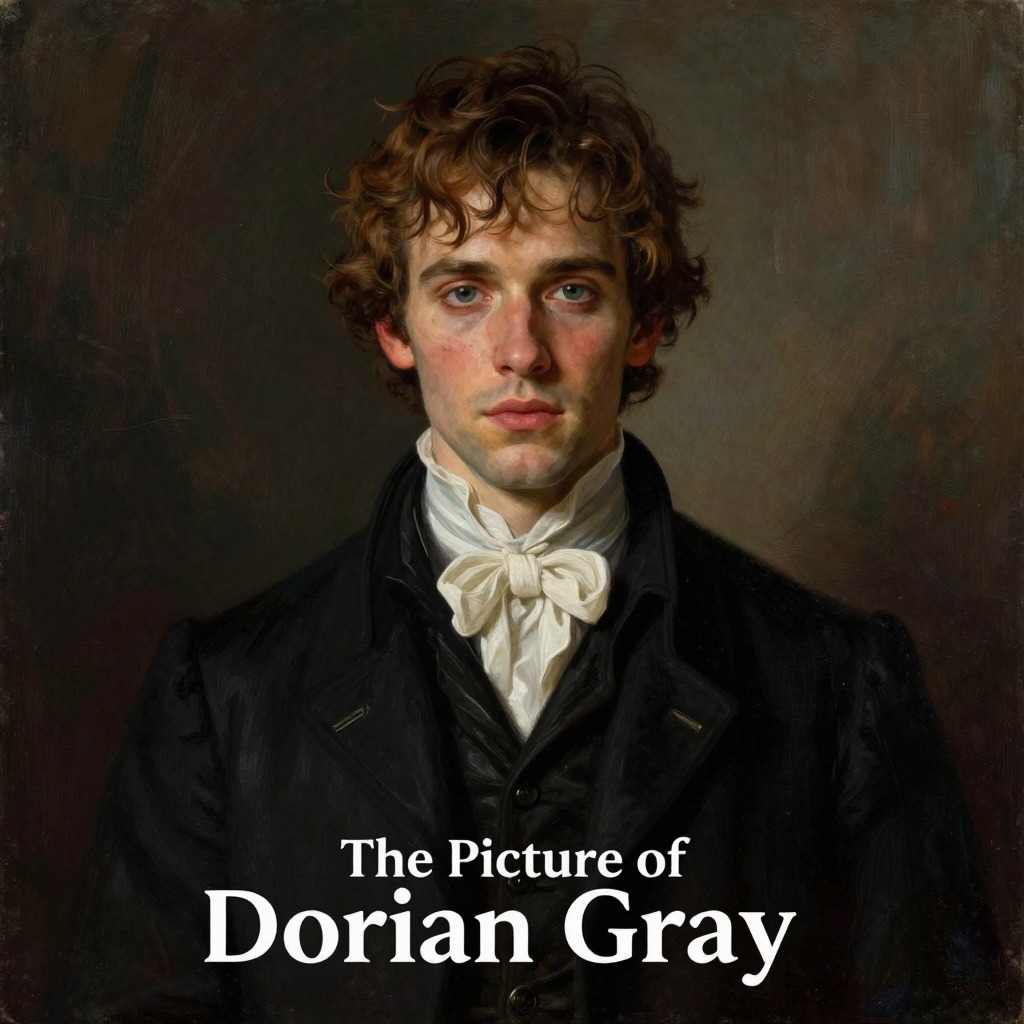
The novel's crucial innovation is the literal externalization of conscience. The portrait does not merely symbolize Dorian's moral state; it physically records every sin, becoming "like conscience to him." The painted face develops lines of cruelty, a warped mouth, and a look of cunning, while Dorian himself remains untouched by age or corruption. This externalized conscience is more terrible than an inner one because it is objective and inescapable. Dorian can hide the canvas behind a screen and lock it in a schoolroom, but he cannot alter what it shows. The portrait becomes a mirror of his soul, a "visible symbol of the degradation of sin" and "an ever-present sign of the ruin men brought upon their souls." It is a conscience that cannot be reasoned with, prayed away, or silenced by good intentions.
The Shift from Reverence to Loathing
Over the eighteen years during which Dorian pursues a life of exquisite sensation and hidden depravity, his relationship with this externalized conscience undergoes a profound change. What he once hoped would be a guide becomes a burden and a source of terror. He creeps up to the locked room to compare his own unlined face with the portrait's aging, corrupt features, experiencing a "monstrous and terrible delight" in the contrast. Yet the pleasure is shadowed by fear. The portrait keeps him awake at night, and its "mere memory had marred many moments of joy." It becomes a hated presence, a thing he loathes even as he is fascinated by it. When he attempts a single good deed—sparing the country girl Hetty Merton—he rushes to the portrait hoping to see a sign of purification, but finds instead that the face has taken on "the curved wrinkle of the hypocrite" and that the bloodstain on the hand has grown larger. The portrait, as his conscience, refuses to credit his self-deception; it records not the act but the motive, revealing that his "goodness" was merely vanity or the desire for a new sensation.
The Destruction of Conscience and the Death of the Self
The final act of the novel is a direct assault on conscience itself. Dorian, realizing that the portrait is the only piece of evidence against him, decides to destroy it. He seizes the knife that killed Basil Hallward and stabs the canvas, ripping it "right up from top to bottom." This is an attempt to kill the past, to free himself from the record of his sins. But the magical bond between Dorian and the portrait is absolute. As he destroys the painted image, he destroys himself. The servants find "hanging upon the wall a splendid portrait of their master as they had last seen him, in all the wonder of his exquisite youth and beauty," while on the floor lies a dead man, "withered, wrinkled, and loathsome of visage," identifiable only by his rings. The conscience that Dorian tried to kill has, in the end, killed him. The novel suggests that conscience, even when externalized and hidden, cannot be escaped; the attempt to destroy it is an act of self-annihilation.